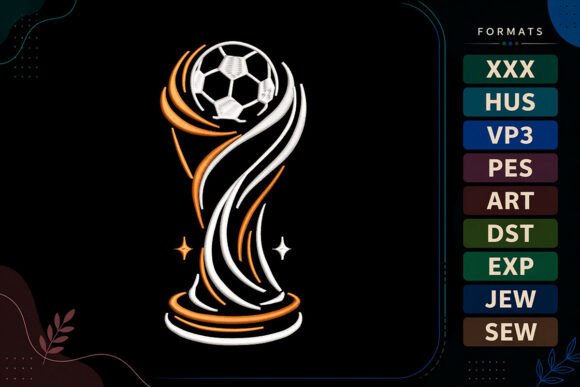
World Soccer Cup Trophy Embroidery Design Review
This week, I’m preparing products for a weekend craft fair, and one design in my library is demanding attention: the World Soccer Cup Trophy Sport. As an embroidery designer focused on what actually sells at a handmade market, I need to evaluate this design not just as a digital file, but as a tangible product that will catch a customer’s eye from across a busy booth.
First Impression: Elegant and Sporty
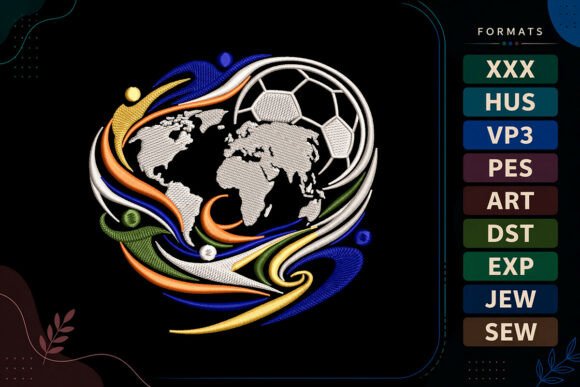
The description promises elegant soccer World Cup trophy embroidery design featuring flowing sporty lines. That’s exactly the vibe. This isn’t a cartoonish or overly aggressive sports graphic. It leans into a classic, almost premium feel, with a sense of motion from those flowing lines. It’s decorative without being fussy, and sporty without being casual. For a craft fair, this gives it a versatile appeal—it can attract both dedicated football fans and those looking for a more subtle, well-crafted sports-themed gift.
Where This Design Stands Out on Products
My table display will have embroidered tote bags, aprons, tea towels, patches, caps, and pillow covers. Here’s my practical judgment on where the World Soccer Cup Trophy Sport will perform best.
Premium Fabric Items & Giftable Goods
The elegant lines suggest it works beautifully on items where the embroidery itself is the star. A simple, high-quality cotton tote bag or a linen market bag would be perfect. The design becomes a focal point, elevating the product from a simple bag to a specialized handmade product. Similarly, on a neutral-colored pillow cover or a fabric pouch, it feels giftable—like something for a fan’s desk or a child’s room. It’s less suited to busy, textured surfaces like some tea towels, where the finer lines might get lost.
Caps and Apparel: A Careful Application
For caps or jerseys, as mentioned in the description, the flowing lines are a great fit stylistically. However, curved surfaces and thicker fabrics require extra planning. The stitch density and hoop size need to be right to prevent puckering on a cap’s curved panel. On a dark fabric jersey, thread contrast is critical; a silver or bright white thread would make those sporty lines pop. This is a design where creating a real mockup on scrap fabric of similar weight and color is essential before batch production.
Embroidered Patches: Potential with Size
As an embroidered patch, this could be a strong seller. The trophy silhouette with the football topper is iconic and instantly recognizable. However, I must be wary of small details and lettering if the design is scaled down too much. Tiny elements can lose clarity and become a mass of dense stitches. For a patch, I’d likely use a slightly larger hoop size to preserve the elegance of the flowing lines. A well-made patch can be a high-value small shop product on its own or applied to a backpack.
Practical Production & Selling Points
Turning a digital embroidery file into a profitable craft fair product requires a cold, hard look at production logistics.
Visual Clarity and Batch Production
The World Soccer Cup Trophy Sport is easy to understand at a glance—it’s the World Cup trophy. This is a huge advantage at a busy market. Customers don’t need to study it; they recognize it immediately. That instant connection drives buyer engagement. For production, the clear silhouette and lack of overly intricate small lettering make it feel repeatable for batch work. I could efficiently run a series of tote bags without constant machine tweaking, assuming the embroidery file is well-digitized with appropriate stitch density.
Photography and Online Sales
For my Etsy listings and printable mockups, this design photographs well. The elegant lines create visual interest without being chaotic, making for clean, attractive product images that communicate handmade quality. It helps with brand consistency if sports designs are a part of my shop’s offering. Using it on a simple tote bag in a printable mockup as a design asset for an online listing would be very effective.
Critical Designer Notes Before Hooping
- Test on Scrap Fabric: Always test the design on a scrap of the actual fabric you plan to use—be it canvas for a tote, linen for a towel, or twill for a cap.
- Check Thread Contrast: On dark fabrics, use a light, reflective thread. On light fabrics, a darker thread may add sophistication.
- Review Stabilizer Choice: The right stabilizer is key, especially for fabrics with texture or for items like aprons that need structure during stitching.
- Inspect Stitch Density: Look for areas that might be too dense, which can cause fabric stiffness or puckering, particularly on softer items like pillow covers.
- Confirm Licensing: Before selling any finished product, confirm the commercial embroidery license terms for the digital file. Never assume.
Craft Fair Booth Strategy
In a real booth setting, I’d use the World Soccer Cup Trophy Sport on a few key products to draw attention. A beautifully embroidered tote bag hung prominently on my display backdrop acts as a silent salesperson. A cap with the design, displayed on a stand, attracts fans. Perhaps a single, well-made tea towel with the design (if the fabric is smooth) can sit next to more rustic designs, showing the range of my work. The design’s elegance adds a touch of premium value to the booth, balancing out more casual or funny items.
Its success hinges on execution. A poorly hooped, puckered version on a bag will undermine its elegance. A crisp, clean stitch with perfect thread choice makes it look professional and valuable. For the Etsy seller or creative entrepreneur also selling online, having a high-quality photo of this well-executed design on a product can drive sales beyond the fair itself.
Final Judgment for Handmade Markets
The World Soccer Cup Trophy Sport embroidery design is a strong contender for sports-themed product lines. Its elegant and sporty mood gives it versatility across premium gift items and fan apparel. For production, its recognizable silhouette supports batch work, but attention to fabric choice, stabilizer, and scale is mandatory to preserve its detailed lines. On the craft fair table, it stands out as a design that speaks to quality and passion, appealing to customers looking for more than just a generic logo. It’s a design that, when stitched with care, can genuinely enhance product value and booth display strength.
My next step is to check the specific file details I have—hoop size recommendations and thread color list—and then stitch my first real mockup on a natural canvas tote. That hands-on test will tell me everything I need to know about turning this digital design into a winning handmade product.